

Access resources and documentation from scouting organizations
Stage 3 moves into more independent skill execution, including making more effective shelters, preparing and maintaining fires, and cooking simple foods. Nature awareness is emphasised, with Scouts expected to identify useful trees and plants. It prepares them for the jump to Stage 4 by emphasising practical competence and safe real-world application.

Stage 2 deepens Backwoods skills by introducing simple tool use, basic fire-lighting techniques, knotwork, and creating small natural craft items. Scouts begin taking more responsibility for preparation and planning while still operating in a guided environment. It builds confidence through hands-on, practical challenges that reinforce outdoor awareness.
Stage 4 prepares Scouts and Ventures for competence-level hillwalking, including packing and caring for gear, planning overnight hikes, advanced emergency response, and taking leadership roles. Youth plan routes, assess risks, manage team safety, and practise treating realistic injuries. The culminating experience is a self-planned, multi-hour or multi-day hike.

Stage 3 shifts into more independent skills: Leave No Trace principles, distress signals, map reading, compass use, first aid basics, and crossing varied terrain like bogs. Sessions become more scenario-based and challenge youth to prove competence and decision-making. A longer practical hike requires applying all learned skills.
Stage 2 builds on the basics by developing early navigational awareness, map familiarity, simple route planning, and safety habits. Young people learn how to prepare clothing and equipment, follow leaders safely, and begin recognising terrain types and outdoor hazards. A practical hike reinforces these new skills.
Stage 1 introduces young Beavers and Cubs to the basics of hillwalking in a safe, den-based learning environment. Sessions focus on simple planning, recognising basic gear, staying safe, teamwork, and a gentle introductory practical walk. The emphasis is fun, confidence-building, and foundational outdoor awareness.
This guide introduces Scouting Ireland’s Emergencies Adventure Skills (Stages 1–4), providing practical first-aid knowledge and preparedness skills for youth members and Scouters. It outlines the core purpose of helping young people stay safe, respond to emergencies confidently, and develop lifelong first-aid abilities. The document serves as a simplified teaching resource, not a replacement for formal first-aid training.

Stage 4 focuses on applied first aid and practical emergency response, including treating sprains, strains, fractures, choking, poisoning, and blisters. Scouts also learn pioneering skills for building improvisational stretchers, backwoods shelter construction, and safely moving an injured person. The final sessions include scenario-based assessments combining planning, navigation, teamwork, and hands-on emergency care to demonstrate full competence.
Stage 3 develops more advanced understanding, including how to manage common injuries, check responsiveness, handle bleeding, and communicate incident details effectively. Scouts also practice planning safe activities, understanding risks, and learning how emergency services locate incidents using directions or features. The level prepares them for more hands-on first aid while reinforcing calm decision-making.
Stage 2 builds on foundational knowledge by teaching Scouts how to perform simple first-aid actions, such as treating minor cuts, burns, or nosebleeds, and recognising when someone needs urgent help. Sessions introduce practical skills like the recovery position and basic hazard spotting during activities. At this level, youth members gain more confidence responding to small incidents safely and responsibly.
Stage 1 introduces the very basics of emergencies for younger Scouts, focusing on recognising danger, knowing how to call for help, and understanding simple first-aid concepts. Activities use games and roleplay to teach safety awareness, what counts as an emergency, and how to communicate clearly with adults or emergency services. By the end, youth members understand how to stay safe, keep calm, and alert someone appropriately.
This PDF provides the requirements for all levels of all Adventure Skills.
This Scouting Ireland resource provides a six-week starter framework to help Cub Scout Packs begin the year smoothly, focusing on SPICES, leadership roles, ceremonies, and team-building games.
 Cubs
CubsThis is the current Child Safeguarding Statement template, released September 2025. This document is a legal requirement in the Republic of Ireland.
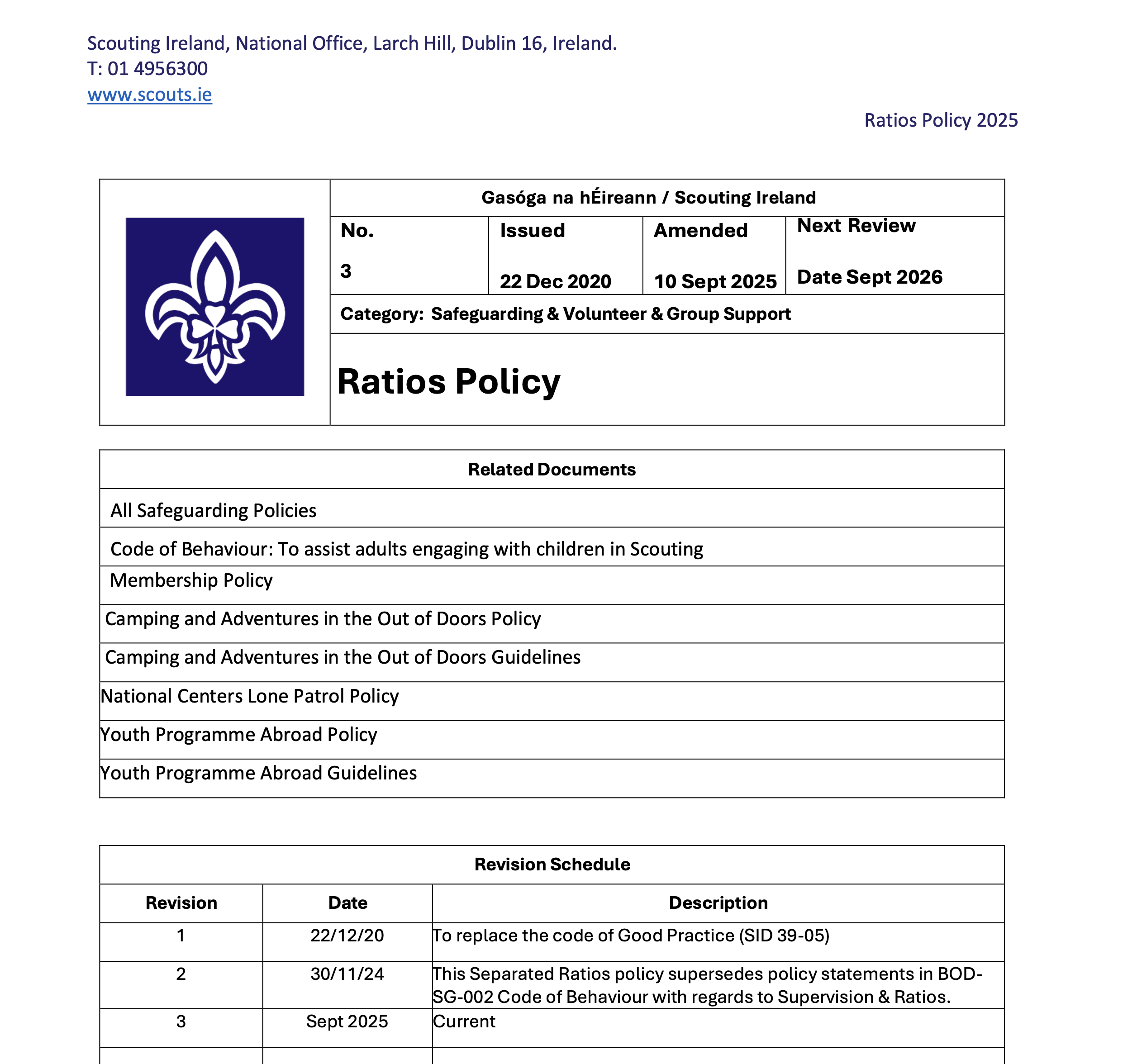
Scouter Ratios 2026